Every year, commercial construction projects in Oregon get delayed, fined, or outright failed at inspection, not because of faulty electrical work or structural issues, but because of low-voltage systems that weren’t installed correctly.
Fire alarms wired out of compliance.
Data cabling routed through the wrong conduit.
Access control systems that were never properly documented.
These are the kinds of problems that stop a project cold, right when you can least afford it. Building inspectors see these mistakes constantly. And while they can’t always tip off contractors in advance, the rules are clear for those who know where to look and who to work with.
If you’re a business owner, property manager, or general contractor in the Salem or Willamette Valley area, what you don’t know about low-voltage systems could be costing you serious time and money. Here’s what inspectors wish you already knew.
Permits are not optional
And inspectors know when you’ve skipped them. This might seem obvious, but it’s one of the most common and costly oversights in commercial construction. Many business owners assume low-voltage work, because it operates under 50 volts, doesn’t require permits. That assumption is wrong, and it’s expensive.
In Oregon, low-voltage systems, including fire alarms, security systems, structured cabling, and access control, often require permits under the Oregon Structural Specialty Code and NFPA standards. Inspectors are trained to spot unpermitted work. When they do, projects get red-tagged, installations have to be torn out, and timelines collapse.
Fire alarm systems have some of the strictest requirements
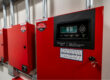
And the highest stakes, too. If there’s one low-voltage system that inspectors scrutinize most intensely, it’s fire alarms. And for good reason, these systems are life safety equipment. NFPA 72, the National Fire Alarm and Signaling Code, governs nearly every aspect of how these systems are designed, installed, tested, and documented.
What inspectors commonly find lacking:
- Improper device placement — smoke detectors and pull stations that don’t meet spacing and coverage requirements
- Missing or incomplete as-built drawings — documentation that shows exactly where every device, wire, and panel is located
- Untested systems — fire alarms that were installed but never formally tested and signed off before inspection
- Non-listed equipment — devices that aren’t approved for use under the applicable code
- Lack of proper labeling — circuits and panels that aren’t clearly identified for first responders
A failed fire alarm inspection can prevent occupancy entirely. The cost of getting it right the first time is a fraction of what a failed inspection and re-inspection will run you.
Structured cabling isn’t “just wires” to an inspector
Many contractors treat data cabling as an afterthought, something to knock out at the end of a project. Inspectors know this, and they look for it. Improperly installed structured cabling can create fire hazards, interfere with other systems, and fail to meet the building and fire codes that govern how cables are routed, bundled, and protected. Key things inspectors look for:
- Correct cable ratings — plenum-rated cable must be used in air-handling spaces; using the wrong rating is a code violation
- Proper penetration sealing — any cable passing through a fire-rated wall or floor must be firestopped correctly
- Separation from high-voltage lines — low voltage and high voltage wiring must maintain an appropriate distance to prevent interference and hazard
- Cable support and management — cables cannot simply hang loose or rest on ceiling tiles
Are you confident your data cabling was installed by someone who knows the difference between a plenum and a riser environment?
Access control and surveillance systems must be coordinated with the overall build
One of the most overlooked aspects of low-voltage inspections is how access control and video surveillance systems interact with the rest of the building. Inspectors want to see that these systems were planned and integrated, not bolted on at the last minute. Common issues that raise red flags:
- Cameras installed without clear sight lines — placements that don’t actually cover entrances or critical areas as claimed
- Door hardware that wasn’t coordinated with the fire alarm — access control doors must fail-safe in a fire event, and that requires proper integration
- Power supply issues — systems that share circuits with other equipment improperly, creating reliability and code concerns
- No documentation of the system architecture — inspectors want to see that the system was designed with intent, not improvised
This is exactly where hiring an experienced low-voltage contractor makes all the difference. A specialist knows how these systems need to talk to each other and how to document them for inspection.
Don’t wait until the last minute to schedule inspections
This is the practical advice inspectors wish every project manager would hear earlier in the process. Low-voltage inspections need to be scheduled well in advance. In Oregon, final inspections can take time to coordinate, and if your system fails, re-inspection scheduling adds even more delay.
The solution is to work with a low-voltage contractor who builds inspection readiness into the project from the very beginning.
Don’t let an inspection failure be your wake-up call
The gap between a passed inspection and a failed one almost always comes down to who did the work and how seriously they take code compliance, documentation, and system integration.
At Low Voltage NW, our technicians bring more than 40 years of combined experience to every commercial project in the Salem and Willamette Valley area. We pull the right permits, install to code, document everything, and stand behind our work through annual inspections and ongoing support.
Your project timeline is too important to leave to chance. Your tenants, employees, and customers deserve systems that work and are built to last. Contact us today and go into your next inspection with confidence.